Our research programme sits between agriculture and pharmacology - isolating, testing, and modelling the compounds hidden in Uganda's crop by-products, and using computation to point synthetic chemistry in the right direction.
We source hibiscus calyces, pineapple husk, moringa leaf, ginger fibre and other residues, then extract, standardise and formulate them into medicinal-grade ingredients - reducing agro-waste while producing hypertension, diabetes and liver-support products.
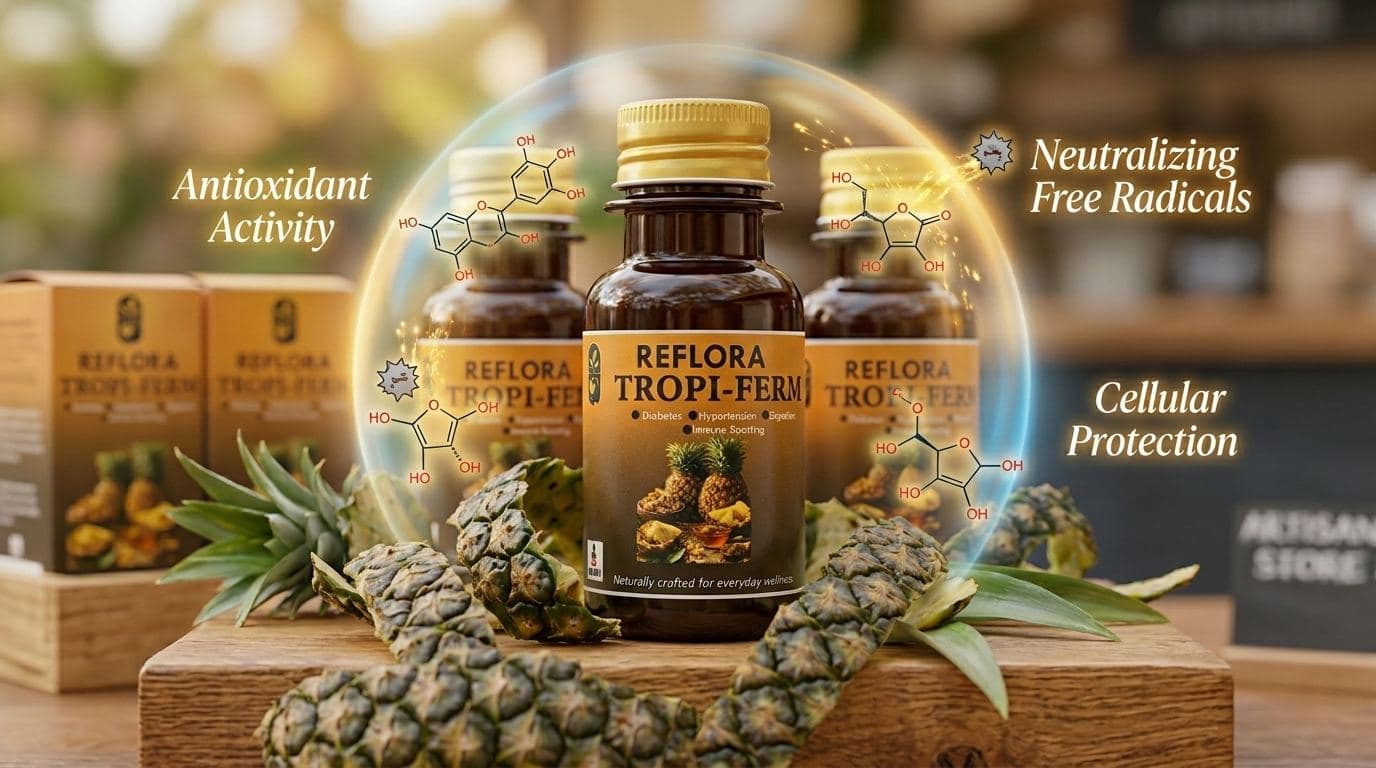
Using chromatographic separation and spectroscopic analysis, we identify the antioxidant and bioactive constituents responsible for a plant's therapeutic effect - the same chemistry behind claims like “antioxidant activity” and “cellular protection”.
Molecular docking, virtual screening and structure–activity modelling help us prioritise which isolated or synthetic candidates are worth taking further - before committing bench time to synthesis.
Where a natural lead needs improved stability, potency or yield, our synthetic route work designs analogues - keeping one foot in the plant and one in the flask.
A characterised compound is only useful once it is dosed, stabilised and packaged - the final research step that turns a finding into the teas and tonics on our shelf.
Our active research questions double as practical training modules for students - so findings and technique move through the lab together.
Our Tropi-Ferm tonic began as a question about what happens to the polyphenols in pineapple husk during fermentation. Analytical work traced the resulting antioxidant activity to specific compounds capable of neutralising free radicals and supporting cellular protection - the basis for the finished formulation now supporting digestion, immune function, diabetes and hypertension management.
We work with agro-processors, universities and cosmetic brands who want a rigorous chemistry partner.
